

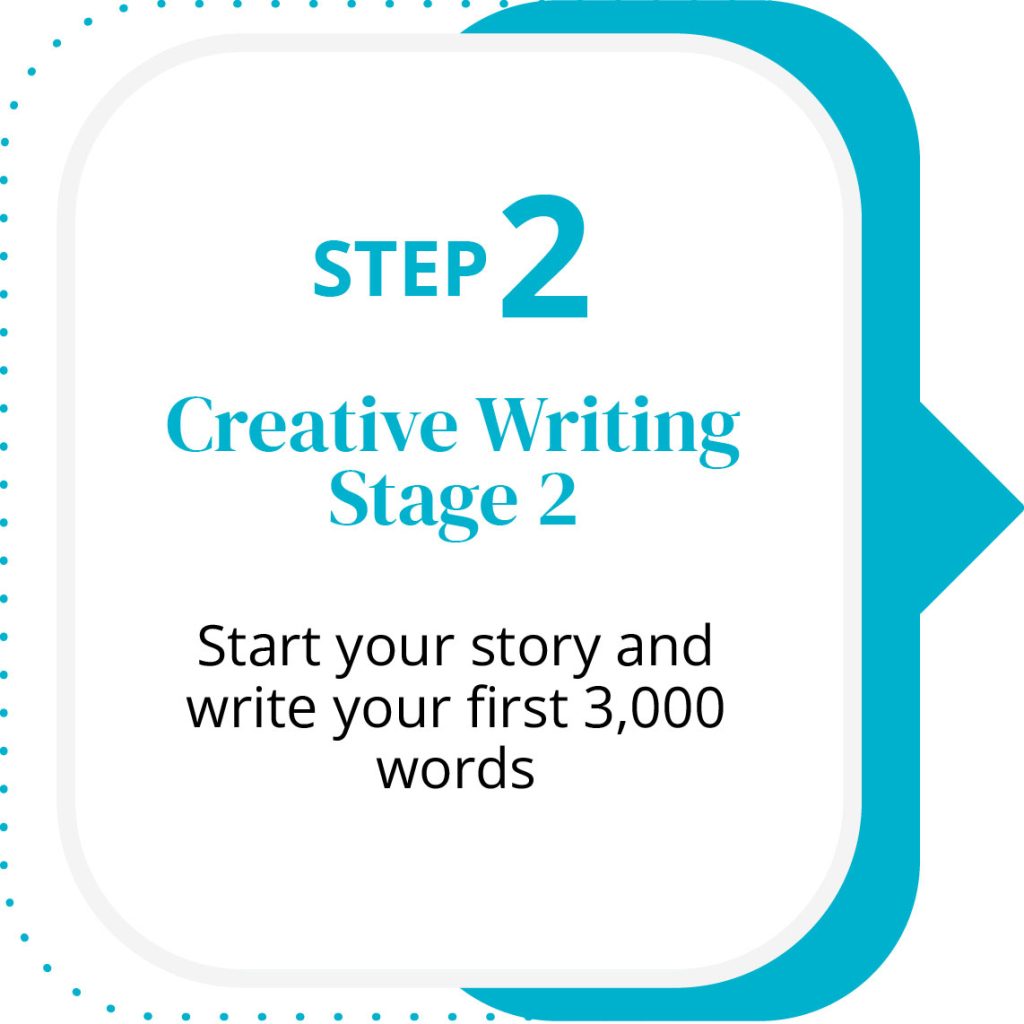
Creative Writing Stage 2 is a creative writing course that is the ideal next step for writers who have discovered they love writing and are ready to take it further. You’ll build the skills, structure, and confidence to start shaping a bigger story.
You will:
Create characters so real your readers won’t be able to stop thinking about them
Write an opening that makes someone cancel their plans because they have to keep reading
Finally finish what you start – with the structure to keep your story moving
Write dialogue and scenes that feel alive on the page
Walk away with at least 3,000 words of fiction you’re genuinely proud of
Go from “I’d love to write a novel one day” to “I’ve actually started”
“I really enjoyed the format of the course and the depth the content went to. The feedback on my assignments was so informative and constructive that I feel my writing has improved immensely.”
– Karen Lumley
| Key information | |||||
|---|---|---|---|---|---|
| Key information: | |||||
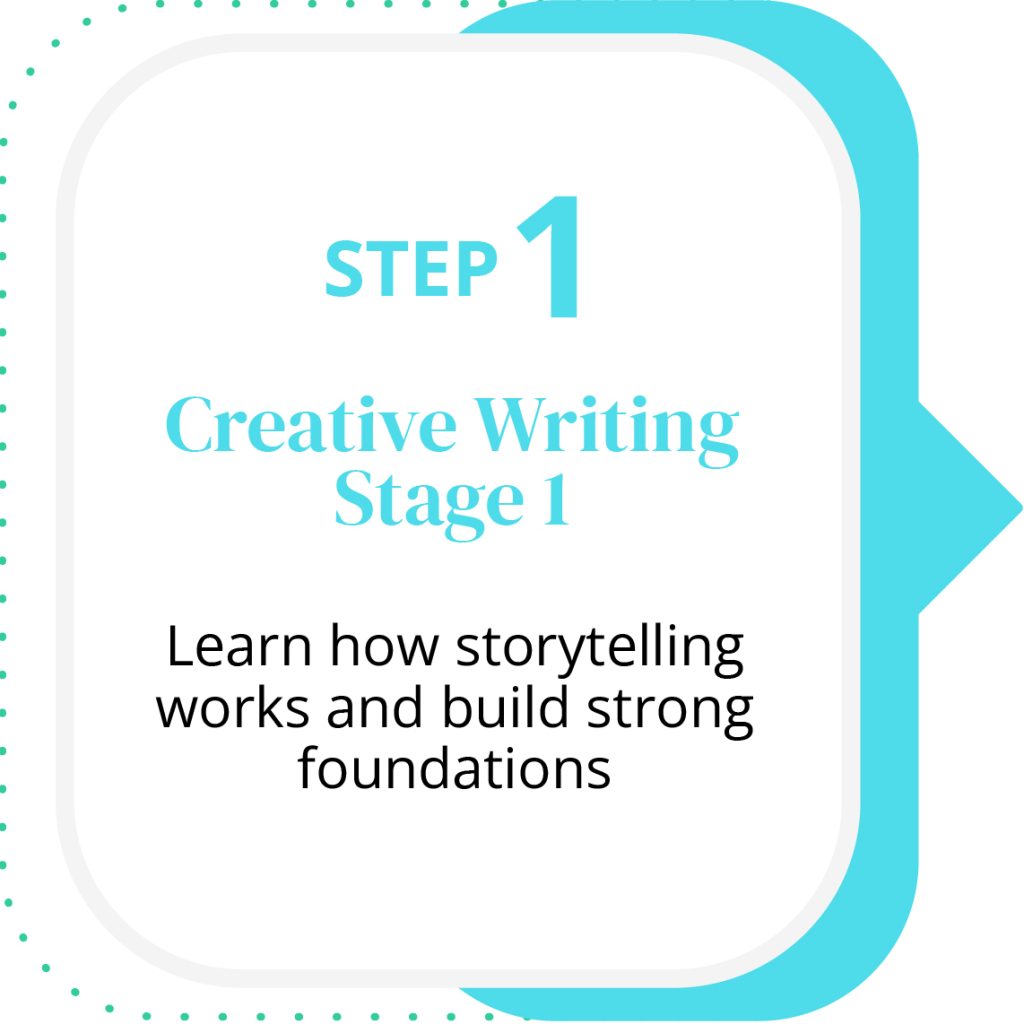
If you’ve completed Creative Writing Stage 1, you’ve already explored the fundamentals of writing fiction and discovered what happens when you put those skills into practice. It’s a great feeling when it starts coming together.
You’re now ready for our Creative Writing Stage 2 course, which is all about giving you the guidance and support to tackle something a little more ambitious.
This is where you start stretching your writing further – taking an idea beyond a promising few pages and learning how to make it hold together, gather momentum and keep a reader wanting more. You’ll make bigger creative decisions, experiment with what your story could become and discover how much more you can do with the writing skills you already have.
By the end, you’ll have written at least 3,000 words of fiction you can be proud of and a great foundation to take your story further.
“I understand structure so much better and this is already shaping how I can continue my story.”
Merilyn Spratling
Creative Writing Stage 2 doesn’t just teach you about writing – it teaches you how to build a story that works. Over six modules, you’ll develop the complete set of craft skills that separates writers who start things from writers who finish them.
You’ll go far beyond the basics. You’ll learn how to interrogate your characters using a set of powerful questions that reveal what truly drives them – their desires, their fears, and the factors that make them human. You’ll build the kind of characters that readers invest in and that propel a story forward.
Where you begin your story is one of the most important decisions you’ll make. You’ll learn what your opening pages need to accomplish, the common traps that trip up most writers, and how to craft a beginning that makes your reader lean in from the very first line.
You know that feeling when you can’t put a book down? That’s stakes at work. You’ll discover the different types of stakes, how to layer them for emotional depth, and how to raise them progressively so your story builds in a way that makes readers want to know more.
Pace isn’t about writing fast – it’s about controlling the reader’s experience. You’ll learn how different genres create rhythm, how to vary pace for maximum effect, and how to write action sequences that crackle with energy.
Great dialogue isn’t just characters talking – it’s where your story can come alive with depth and colour. You’ll learn the art of subtext, how to give each character a distinctive voice, and the techniques that make the difference between dialogue that sings and dialogue that plods.
Scenes are the building blocks of your story, and in this course you’ll learn how to construct them with confidence. You’ll discover how to enter a scene late and leave early, when to show a full scene versus summarise, and how to build settings that actively shape your narrative.
Choosing the right point of view can make or break your story. You’ll learn how to choose which point of view to use, whether you can switch point of view and how to create an immersive reading experience. You’ll also discover how to avoid the mistakes that pull readers out of the dream.
Everyone says it, but few explain what it actually means. You’ll get practical tools for showing emotions through the body, the heart, and the mind – and you’ll learn when telling is actually the better choice. You’ll also discover how to write with all five senses, creating prose your reader can see, hear, and feel.
Structure is what separates a promising idea from a finished story. You’ll learn the key structural landmarks every narrative needs, how to navigate the (often challenging) second act, and how subplots and story questions create the momentum that carries your reader all the way to the end.
You’ll learn how to create a story world that feels lived-in and specific, how to structure chapters that pull readers forward, and how to build toward a climax that feels both surprising and inevitable. These are the skills that make a story feel complete.
That last one matters. Because it means you’re no longer ‘thinking about writing a book.’ You’ve actually started.
“I’m thrilled to have ended up with a starting chapter… it’s made me more confident in my ability to actually produce words!”
There’s a well-known gap in writing development. You’re past the beginner stage – you know you can write. But you’re not yet ready for a full novel commitment. And without the right support at this point, most writers stall. Not permanently. But long enough to lose momentum.
Creative Writing Stage 2 is the bridge that stops that from happening.
It helps you shift from short exercises to sustained storytelling. It builds your narrative confidence gradually, module by module. And it gives you the craft skills that make the difference between a good idea and a good story.

Once you have enrolled in this online creative writing course, you will be eligible to attend 3x The Write Direction live sessions – even after you’ve completed your course. This ongoing support is invaluable! These are bonus classes held each month on Zoom, with award-winning author and course creator Pamela Freeman.
Q: Do I need to have completed Creative Writing Stage 1?
A: Creative Writing Stage 1 is an excellent preparation for this course. It’s not a strict prerequisite, but if you haven’t done any creative writing course, we recommend you start there. If you already have some basic creative writing experience and feel comfortable with fundamentals like voice, point of view, and storytelling basics, you’ll be fine.
Q: Do I need a novel idea before enrolling?
A: No. Many students arrive with only a vague idea or even just a desire to write something longer. The early modules help you develop a viable concept and build from there.
Q: What if I’m not sure I want to write a novel?
A: That’s completely okay. The course focuses on storytelling skills that you can apply to novellas, longer short fiction, memoir-style writing, and narrative non-fiction too.
Q: Is the 3,000-word goal compulsory?
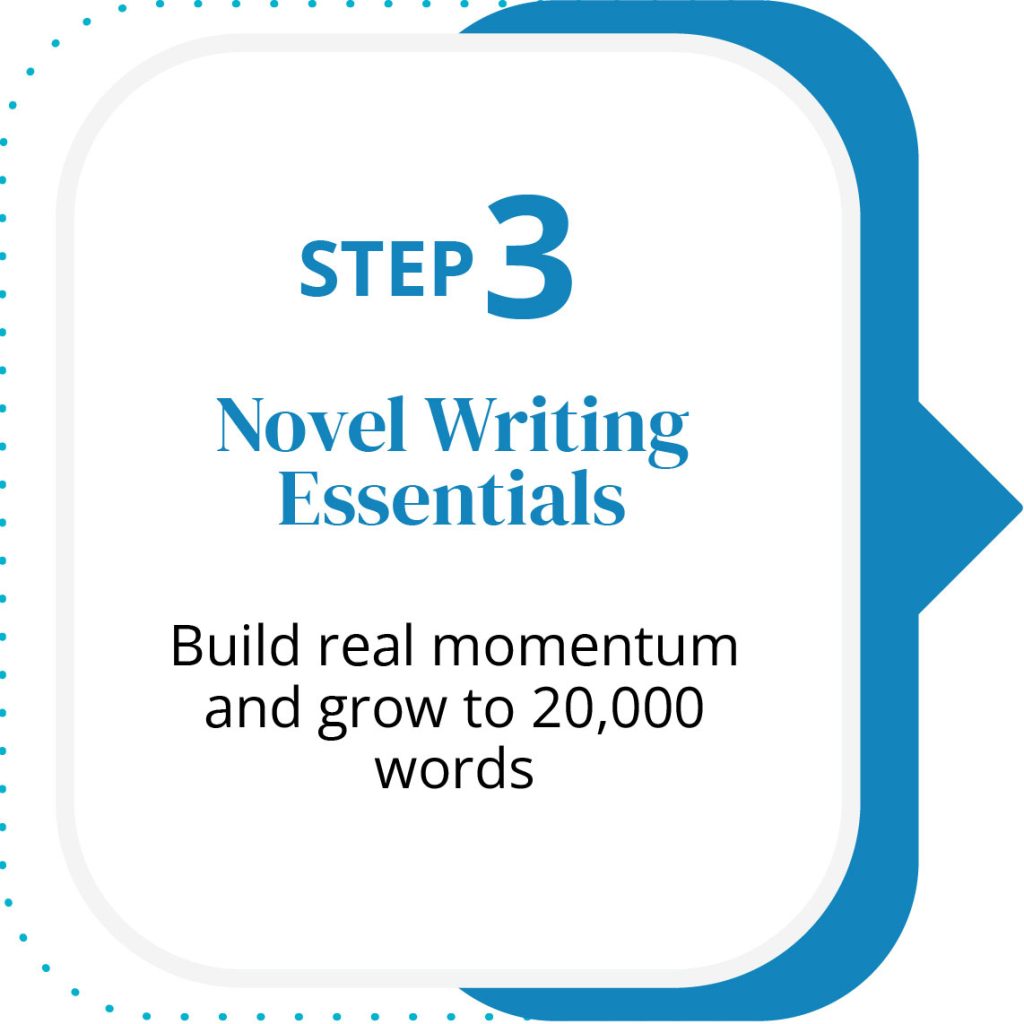
A: It’s a strong target because it prepares you perfectly for Novel Writing Essentials – but it’s not about pressure. It’s about giving you a meaningful milestone and a real sense of achievement.
Q: Will I receive feedback on my writing?
A: Yes. The course includes guidance and feedback designed to help you keep moving forward rather than getting stuck in perfectionism.
Q: What if I struggle with consistency?
A: You won’t be alone. The course is specifically designed to help you build realistic writing habits alongside work, family, and life commitments.
Q: What happens after this course?
A: Most students move naturally into Novel Writing Essentials, already equipped with the word count, confidence, and story direction they need to succeed.
| Key information | |||||
|---|---|---|---|---|---|
| Key information: | |||||
This is an online course
Duration 1
This is an online course
Opens: Monday 19 October 2026 Start any time during the week
Opens: Monday 19 October 2026 Start any time during the week
Duration:
6 weeks Allow 3–4 hours per week
Duration:
6 weeks Allow 3–4 hours per week
Feedback on your writing:
Weekly
Feedback on your writing:
Weekly
With: Margaret Whiskin
With: Margaret Whiskin $650 One place left! |
This is an online course
Duration 1
This is an online course
Opens: Monday 9 November 2026 Start any time during the week
Opens: Monday 9 November 2026 Start any time during the week
Duration:
6 weeks Allow 3–4 hours per week
Duration:
6 weeks Allow 3–4 hours per week
Feedback on your writing:
Weekly
Feedback on your writing:
Weekly
With: Nat Newman
With: Nat Newman $650 | ||||
